God and Satan: Doubt as Forsakenness and Its Faithful Representation in Film

(beware of spoilers)
I wasn't always a Bible-believing Christian, and, when I became one, God certainly didn't make it easy for me to stick around. The famous questions of evil and suffering, paradoxes of a God who is almighty and all-benevolent, whether God was even all-benevolent at all, and even just anger and frustration of experiencing being a human when God is silent, all tore into my faith pretty early on. Many times, the shame of experiencing these doubts was enough to keep me from asking the questions at all, leaving me to wonder in solitude why exactly I needed the God of the Bible when he so clearly didn't need me, if he even existed at all. The times I would ask, the answer would consistently be, in a variety of words, demeanors, and unspokens, "just have faith," or, "stay in the Word," or, "he'll answer your prayers if you just bring them to him." Nice words, not quite false, but not quite true either, and quite inexplicably so.
Having been a movie-goer for years, and being a young man in the early 21st century, I was exposed to more than just a couple "Christian" films. Supposedly, they were supposed to be incredible stories about God's interventions and miracles, impossible scenarios that could only be solved by God stepping in and undoing the messes in which these faithful men and women of God found themselves in. I would watch these movies with my youth group friends and, without really knowing why, find that they were more frustrating than relieving. Of course so-and-so from the movie has their prayers answered, their doubts removed, and their faith undeniably confirmed; the writers only have 120 minutes to get to their resolution.
Today, I know I am not alone. In fact, it doesn't even seem like I'm in the minority. If this is true, then, statistically speaking, you are in this majority with me and have your own set of questions. Quite possibly, you have your own reasons to be ashamed of your questions, what with the high-profile voices shouting through as many mediums as they can find just how sure they are of the things they believe. If this is true, then you may be where I was when my faith stood on its shakiest grounds yet—maybe "shaky" is just a word we've been conditioned to associating with the doubt we so desperately wish to rid ourselves from and, in fact, doubt is one of the most human things we can experience and which brings us closer to the heart of God than we could ever expect. Where does our doubt come from and where is the Church's failure when it comes to ministering to it, both generally speaking and, more specifically, through film, which so permeates our culture today?
- Secularity and Fundamentalism -
I talk to God as much as I talk to Satan
‘cause I want to hear both sides.
Does that make me cynical?
There are no miracles and this is no miraculous life.
I savor hate as much as I crave love because I’m just a twisted guy.
Is this the pinnacle, is this the pinnacle, the pinnacle of being alive?
Now I see the light.
These are the opening lyrics for rock band Biffy Clyro’s song God and Satan, one of several songs from blatantly atheist bands that somehow ministered to me years ago in the midst of the deepest doubt of my faith. “Who, what, when, where, why, and how is God? What is misery and why is there so much of it? What else might God be if I don’t like how the one in the Bible answers these questions?” I wanted to hear as many sides to these answers as possible.
Secularity
Biffy's lyrics couldn’t have been written at any time in history other than ours, a secular age oversaturated by the options of faith. So many religions, denominations, customizations, nuances and articulations, altercations, emancipations, implications, and enunciations. You believe something about transcendence in and of this world and, no matter how much you learn, study, and meditate, you must reckon with the fact that you might be wrong. I reckon with that fact every day. That is exactly what makes our secular age distinct from any other: the nova effect, the galaxy of options in which to place our belief, birthed from the cross-pressures of history, immanentization (the stripping away of the supernatural, the eternal, and the mysterious from meaning), and transcendence.
In A Secular Age, Charles Taylor explains that, in medieval times, the secular was another word for the earthly and temporal, as opposed to the transcendent heavens and eternity. When the Enlightenment came around, the meaning transformed into the neutral and "areligious". Today, however, we do not boast the luxury of such distinctions and are forced to contend with the secular, even in our belief, because the nova effect violently thrusts upon us so many arguably valid sources of meaning, transcendence, and spirituality as to make any one of us into agnostics.
Centuries ago, the only valid option in which to believe, at least in Western Europe, from whence we draw much of our social structures, was the God of the Bible. It was an unthought, an unquestioned truth everyone simply knew; it was safe to assume any given individual was brought up in the Church. In reference to good and bad, the classic imagery of the hero who consults with his imaginary miniature angel and demon selves on either shoulder comes to mind. Today, we are brought up with the very different unthought that not only are we not restricted to the angel and the demon, but the angel and the demon are just two voices which proceed from the same spiritual narrative and there are more narratives than can be counted. Statistically, what advantage does one valid narrative have over the innumerable others?
Simon Neil of Biffy Clyro talks to both God, Satan, and whoever else he needs to hear in order to decide who or what, if anything, will be the benefactor of his faith as he navigates the cross-pressures of religious history. Yet, he is not one to believe in miracles or a miraculous life; reality is immanent, the immediate, stripped of the supernatural and the spiritual. He questions this being the pinnacle of human existence and concludes that accepting this agnosticism is the closest thing to transcendence, to eternality, to nirvana, to seeing the light, that one can come to. This first verse alone encompasses our secular age to a T.
Fundamentalism
Now, Taylor also points out there is such a thing as a fundamentalist, a title which applies to some religious people as well as atheists. Fundamentalists constitute a minority of people who do not question the narratives they believe, who flatten this present moment of nova into the set of presuppositions they believe to be true, obvious, and undeniable. One of James K. A. Smith's theses in How (Not) to be Secular is precisely that this group is a minority and that, in fact, most people do not merely hold to their beliefs, but constantly wrestle with them, at least secretly, never knowing for sure whether or not they have apprehended actual truth or, as worded by Tom Hanks's character Zachry Bailey in Cloud Atlas (2012), "true true".
- Storying and Re-Storying -
Thus, humanity as a whole, with few exceptions, is deeply skeptical of the narratives with which it is presented, even those which it believes. Said narratives must bear the weight of both faith and ubiquitous doubt. We know this as we come into contact with the never-ending "re-storying" of the human experience. Stories are told through the arts whether in poetic metaphor, literary analogy, or visual stimuli; we connect with these stories inasmuch as we perceive relatable truth being told, as we see reality reflected in the stories.

As fantastical as The Chronicles of Narnia may be, there is reflected in its pages and characters truths about the human soul—the human reality—which are aptly shown in this fantasy series in ways which help many to gaze upon them in new and enlightening ways. Furthermore, if it failed to reflect any human reality, the story would not make it onto the list of literary classics. This makes for a successful “Christian” story.

Even books and movies based on real life stories are shaped by the voice and perspective in which they're told, which indeed change how they affect their audiences. The stories that are intentionally chosen instead of others, the light in which the various characters are portrayed, the memorable lines that are crafted into the story in order to encourage certain values and anti-values over others, all work towards the "storying" and "re-storying" of our time. Boy Erased (2018) tells the true story of Jared, the son of a Baptist preacher, as he struggles through conversion therapy. The young man, Jared, experiences intense and inappropriate surveillance, social pressure and shame, and even witnesses a gay peer in the same program commit suicide out of the shame of being gay. By the end, Jared has moved beyond the need to become heterosexual, accepts himself as he is, and becomes a successful writer and advocate for the LGBTQ+ community, standing up even to his father. This is the story that was told through this film and not another, through the lens of acceptance of same-sex attraction and not another. It is the product of the original storying and continual re-storying of a particular gay-affirming narrative which has moved even Evangelical churches around the world to change their stance on homosexuality. Humanity formats stories which support their narratives and tell them, and they are compelling inasmuch as they reflect a truth of our shared human experience. Regardless of opinions of right or wrong, human experience cannot and must not be swept under the proverbial rug.
A brief pause here is appropriate to explain what is meant by “Christian story”. Some may find it strange to convert their religion, their sacred belief structure and its associated liturgies and sacraments, into a mere adjective with which to qualify a noun, in this case, “story”. This is a fallacy, as a story can be no more religious than a chair or a cloud. (Personally, I have never heard of a “Muslim” film or an “Atheist” song.) Instead, we ought to contextually recognize the adjective “Christian” as a simple linguistic necessity which, though it makes for a nonsensical phrase, abbreviates and communicates that the main intention of the story (or the film or the song or, yes, even the chair) is to clothe that which Christians believe to be the greatest and most important narrative of all in the vestments of a new story, a new film, a new song, a new book, a new video games It would be fabulous to have better language to get across this point than to reduce one’s beliefs to an grammatical oxymoron; maybe one day the Church will universally distance itself from this unfortunate practice of isolating itself from the culture it is supposed to evangelize. This, however, is not the time or place for this conversation. For now, Christian content is merely that which has the objective of evangelizing or strengthening the Church.
- Truths and Lies -
Truths
With these categories in mind, we can move on to what is perhaps the greatest (or at least most explicit) cultural mediator of our day and in our society: the entertainment industry, namely film. Movies have the beautiful opportunity to gather people around a shared experience. They offer a variety of liturgies for communities of all shapes and sizes: individuals, couples, family nucleus, a class of students... They gather around a screen and partake in digital content which, on its surface, entertains, if nothing else. In other words, film conjures a community which gathers for the two purposes of sharing in the physical liturgy of spending time together partaking of a visual story and contemplating the narratives of that story and whether or not they should be internalized into the viewers or not. We come into contact with a sort of personalized worship which plays out in our assent and dissent to the various premises presented in the story.
I posit that the most meaningful element of any film or story is how nearly and faithfully it represents our human reality. While he doesn't quite make a hierarchical statement like this one, Robert K. Johnston certainly stresses the importance of this faithfulness in Reel Spirituality by showing that a movie is "capable of evoking from those in its audience what it itself portrays" (27), focusing life and enriching it with the experiences within the told stories which would not be possible to relate to by any other means. Likewise, Stan Williams titled his related book The Moral Premise, explaining that every box office hit succeeds because it relates back to ancient truths about morality and spirituality that have been passed down through our mythologies. The same goes for books, but of course the effectiveness of the visual element is lost in the text (certainly the gains in the communication of meaning through the written format lie in the development of a more proficient imagination, which has its place and should by no means be supplanted); the format of film bypasses the imagination of setting and character by providing that for the viewer and proceeds directly to the philosophy and the telling of a story intended to reflect our deepest and most secret experiences and empathies so that our morality, our presuppositions, our actions, might be better understood and built up to a higher standard. The stories must connect.

The Secret Life of Walter Mitty (2013) has to relate to the truth of that burning desire in the hearts of its viewers to live life to its fullest, to see more of the world, to value the present moment at the expense of an uncertain future (and it can more effectively portray that truth through the visuals of a well-produced feature length film than its short story predecessor); otherwise, it does not succeed as a film.

Memento (2000) must speak truthfully to the grieving heart of a man who has lost his wife and to every viewer empathizing with the protagonist, or else the film is irrelevant to the human experience. Leonard, the main character, has suffered brain damage, which causes him to be unable to form new memories and, in spite of that, he is pursuing the man who killed his wife. In his pursuit, he makes discoveries which he will soon forget, so he leaves himself clues to continue searching for his wife's killer. In the end, he kills who he thinks is his wife's killer and realizes that, in fact, he hunted down the real killer over a year ago and killed him already. Revenge was no longer enough reason to live for a man who couldn't develop any new memories. The only thing left for him was the pursuit itself for that revenge. Somehow, this is more truthful to the human experience of grief and purpose than a simplistic good-guy-gets-revenge scenario.

Even the truth of the depravity of human beings must be portrayed faithfully in films like Se7en (1995) for there to be a deep connection with the hearts of the viewers. Detectives Somerset and Mills are assigned to investigate a series of serial murders that are themed according to the seven deadly sins. The murderer, John Doe, is trying to prove the point that everyone is sick and depraved and it is proven true when his masterpiece is complete. The seventh and final serial murder is surprisingly done by detective Mills when he sees that Doe has killed his wife and severed her head; Mills is consumed with uncontrollable wrath and murders John Doe. Somehow, this bleak ending is more truthful to the human experience than if John Doe had simply been found and given a life sentence.
These are just three examples, but note that no Christian examples were used. This is because there are few examples of Christian films which faithfully speak to the human experience. Our questions often go unanswered, our mysteries unsolved, our solutions come too late, and our grief
Lies
Peter Rollins successfully identifies a major implicit inconsistency (if not the major inconsistency) in Christian film, in Insurrection when he lays out its persistent and problematic use of deus ex machina: a literary device and trope typical of a poorly structured or even nonexistent plot. In Latin, the term means "god from the machine" and it refers to when, in ancient theater, a god character would suddenly be lowered onto the stage with a crane (a machine) and act as a plot "fixer-upper". Essentially, the protagonist becomes so overwhelmed by the complications of the story that the author, instead of developing the protagonist into someone who has grown and is now capable of solving the problems he or she is being faced, suddenly introduces a "god" element or, as in the case of many Christian films, God himself to overcome all the challenges for the protagonist before stepping back out of the story line.
Again, it is appropriate to pause and explain what is not meant by these observations. When telling a story, a Christian one no less, the introduction of God is not a bad thing nor is it an automatic failure; it's expected and, depending on the story being told, probably a good thing. Furthermore, as we will see shortly, deus ex machina in Christian films does not automatically isolate all of its viewers. But there is a reason why so many passionate orthodox Bible-believing Christians look at the films we produce in the name of Jesus and feel like something is "off". It's not a lower budget (although better actors, writers, and directors would certainly make the stories better); it's not that God was or wasn't involved; and it definitely isn't because of anyone's lack of salvation. If you recently saw a Christian movie and got the feeling that, despite the tears it procured from your eyes and despite your pastor's recommendation, it was still missing something that you can't quite pinpoint, then this might help.

This also isn't intended to say that all instances of deus ex machina are box office failures or disconnect from reality, as real life presents aleatory elements which save the day just in the nick of time. Jurassic Park (1993), which at one point sat atop the list of highest grossing films, with the enormous T-Rex conveniently and suddenly saving the protagonists from the velocirapters—in the nick of time—is one such example.

Likewise, R2-D2 in every eposodic Star Wars film he appears in acts as a sort of deus ex machina who conveniently saves the day: the trash compactor scene in Episode IV (1977), the hallway of laser blasters in Cloud City and the Millenium Falcon's hyperdrive in Episode V (1980), the rescuing of Han Solo from Jabba the Hutt in Episode VI (1983), saving all of the protagonists on the space ship as they escape Naboo in Episode I (1999), saving Padmé in the droid factory on Geonosis in Episode II (2002), the escape from General Grievous's ship in Episode III (2005), and even providing the last piece of the map to Luke Skywalker in Episode VII (2015), where he has almost no screen time at all.
Deus ex machina has its place in film, whether Christian or otherwise. The Secret Life of Walter Mitty was mentioned above, but it presents a rather anti-climactic instance of deus ex machina when Walter's mother simply hands Walter the lost 35mm negative he had been in search for the whole movie; nevertheless, the story connects with the audience because it was never really about that lost negative at all. The lost negative was the device used to inspire both Walter and the audience to go out and live a fuller life. The question is not whether deus ex machina has a place in a story, per se. Rather, we must evaluate Christian films—projections of our Christian narratives and thoughts—and determine whether the God of the Bible truly operates in this way.
- Doubt and Forsakenness -
Rollins makes the case that, as humans, we are uncomfortable—even miserable—when we experience forsakenness, abandonment, the feeling of being left in the uncertainty of what comes next, being alone. There is a close relationship between feeling forsaken and doubt. What is a forsaken person but one who has been abandoned? What is the doubter but one who has been abandoned as well? Both sit in the midst of life's turmoils seeking answers from a God they have not seen or heard in a long time, if ever. Like wanderers in a dry desert, the mind plays games and commits the sin of amnesia. More fitting to Charles Taylor's nova effect, the mind drowns in the options in which to place faith and is physiologically unable to separate the oxygen from the water it is inhaling. So we ask questions which remain unanswered, we are defeated by our challenges, we go to the grave without closure, we doubt—and we hate it.
It was Voltaire who once said that "if God did not exist, it would be necessary to invent him"; after all, we need someone, something, anything, to rescue us from this lonely road to perdition. Rollins stresses that it is this terrible feeling of being alone with our questions that is actively avoided by the Church. In reality, this neglect of the reality of doubt which Taylor, Smith, Rollins, and most people's consciences attest to is probably localized in certain Christian congregations which possess the environmental factors in which they organically thrive. Unfortunately, whatever those factors may be, the narrative that a) the forsakenness and doubt that most of us experiences is a bad thing which b) God is constantly at work to save us from just in the nick of time is propagated through most of the more popular Christian film that is published. Dietrich Bonhoeffer Even in very sound traditions of Christian faith, these untrue representations of the human experience are commonplace.
Disrespect

Consider Facing the Giants (2006), a tear-jerking story of a few struggling people with unwavering faith who, in the end, have everything work out just fine. In their moments of deepest darkest doubt, the deus ex machina steps in and reassures them that they are not forsaken; he takes them by the hand and leads them to blessings and success. Somewhere along the line, the story stopped being true not because the God of the Bible was confirmed, but because the reality of the incessant doubt which haunts most of us our entire lives was swept under the rug in the hour and fifty one minutes it took to run the movie. The true and living God, creator of heaven and earth, was reduced to the running joke that is R2-D2 in Star Wars and sold to us as if that were the manner in which he acts in our lives.
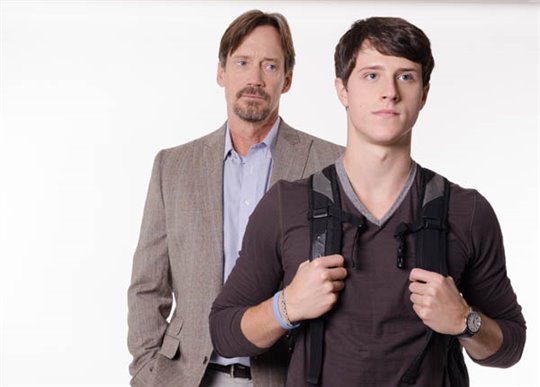
Some years later, God's Not Dead (2014) tells the story of a college freshman who, with simplistic arguments and retorts, manages to overcome his philosophy professor's accusations that God, as Nietzsche said, is dead. In reality, atheist philosophers make much better arguments against God and, in fact, Christians have much better defenses. The relevance of this particular film for our topic is that such a watered-down articulation of the faith once again steps in suddenly from an unlikely source and rescues everyone from their doubts. The protagonist's atheist professor and all of his classmates are converted to Christianity by the end of the movie and we are told this is how these situations naturally play out.
Neither of these movies is incapable of reaching people in the audience, of filling up a theater, or of wrenching tears even from my reluctant eyes. But both perpetuate that narrative that we ought not doubt, that having faith constitutes escaping that forbidden doubt, and that God is ready to shower us in blessings just as soon as we achieve that status. They are movies made by fundamentalists, for fundamentalists; they "get all the press", as James K. A. Smith puts it, but they do little to nothing in terms of ministering to the "fugitive expressions of doubt and longing, faith and questioning" (14). Forsakenness and doubt are not bad things; and God is, actually, not constantly working to save us from our agnosticism and loneliness. A Christian story that doesn't reckon with that experienced reality, as if that reality were an invalid one, as if the Bible had nothing to say about the subject matter, is not telling truth.
Quentin Schultze has recognized that "there doesn't seem to be a respect for doubt" and that it is the context—moreover, the fertilizer—for faith. This is, in part, why Peter Rollins calls forsakenness a "central expression" of Christianity. After all, is not the experience of feeling forsaken, alone in our doubts, drowning in an ocean of unanswered questions, one of the most intimate places we can share with the Savior who hung, forsaken, on a cross in our place? Thus, Rollins expands: "a properly Christological reflection should lead us to see the felt experience of God's absence as the fundamental way of entering into the presence of God" (24).
Doubt in the Hall of Faith
If doubt is ubiquitous, if it is largely unavoidable, if Christians are not exempt from experiencing it, if even God incarnate as Jesus Christ was not exempt from experiencing it (Matthew 27:46), then doubt should not be seen as an evil to avoid, but as a real phenomenon into which some of us must dig more than others in order to develop our faith. After all, Jesus himself did just that vicariously for us and as a perfect forebear in whose image we are being fashioned.
What, then, should be said of verses like James 1:6, which says we are to "ask in faith, with no doubting, for the one who doubts is like a wave of the sea that is driven and tossed by the wind"? A look into biblical theology reveals that doubting has been commonplace among the saints of God from Genesis until today and a brief look at the Greek wording in this verse and other cross references shows that the verb diakrinó (διακρίνω) might be better translated in this context to mean "to waver".
When surveying what is often called the "Hall of Faith", found in Hebrews 11, one finds a mixture of saints who both obeyed without any record of questioning or talking back and a number of others who faced serious doubts. Abraham, for instance, doubted God would work his miraculously to bring about his promise of a family through the womb of his elderly barren wife. So he impregnated his wife's servant in her place (Gen. 16:1-2). Despite believing and being considered righteous because of his faith (Gen. 15:6), Abraham doubted and committed a mistake for which there is little tangible evidence of redemption from God. Likewise, the faith of Abraham's elderly wife, Sarah, is suspect, despite being lauded in Heb. 11:11, because when she laughed at God when she was told she would be given a child (Gen. 18:11-15). This should be an indication that no faith should be suspect because of doubt.
Next, Hebrews 11:13 notes that, from Abel to Sarah, "these all died in faith, not having received the things promised." Behold, the deus ex machina does not grant everyone that perfectly satisfying ending after all.
Isaac grows old and becomes the father of twins. The younger of the two, Jacob, is applauded for his outstanding faith, but this is a man who, in Genesis 27, cheated his brother out of his birthright (as if God could not faithfully bless him without it). Not only that, but Jacob, in his faith, wrestled against God himself, manifested as the Old Testament theophany of the angel of the Lord (Gen. 32:24-32).
Moses is the next doubt-ridden hero of the faith in Hebrews 11, as he didn't even want to accept God's commission to be the liberator of the enslaved people of Israel in Egypt. He offered one reason after another for why he was not suitable for the task—he doubted (Ex. 3:4-15). Of course, the Exodus from Egypt was successful but even Moses didn't experience the promised land; things didn't work out for Moses at the end of his life (Deut. 34:4-5).
Finally, the writer of Hebrews runs out of time to finish detailing the faiths of these admirable historical figures. Instead of summarizing the whole Old Testament, he just lists some names, some of which stand out: Gideon, who doubted he was being commissioned by God even when speaking directly to an angel; David, who authored countless psalms about the inescapable forsakenness he experienced; and the prophets, some of whom were murdered and abandoned in silence.
The witness of the faithful saints of Hebrews 11 is probably enough to establish that doubt in James 1:6 doesn't mean what we might plainly interpret it to mean in English. Nevertheless, the case is incomplete without a couple more brief factors. First, James 1:6 doesn't seem to be making a dichotomy between faith and doubting, as if the two were incompatible or as if doubting were tantamount to sin, but between confidence in coming before God and the wavering, which is another valid translation for the word translated as doubting in English. As evidenced by the Hall of Faith, doubt as we have come to understand it with the forsakenness it entails is not incompatible with a life of faith. Wavering, however, is inconsistent with the notion that we ought to come before God as sons, intimate and bold enough with our Father in heaven to call out to him, saying, "Abba! Father!" (Gal. 4:6).
Secondly, there is more than sufficient grounds to conclude that the forsakenness that Jesus experienced on the cross was as genuine as that which we feel as mere creatures. Jesus Christ, as the perfect vicarious incarnation of God, presenting himself to us on God's behalf, and the perfect vicarious representation of humanity before God on our behalf, was tempted and tried just as we were, yet remained without sin (Heb. 4:15). It is safe to say that Christ's forsakenness was as real as ours, if not more so, lest he not be tried just as we are.
Still, we cannot bear to remain in the dark with unanswered questions. We won't stand for unsatisfying endings. The stories we tell are caricatures of what faith entails—and faith in a secular age, no less. To summarize the short biblical survey of doubt, it is wholly incorrect to think that doubting ought to be avoided at all costs because of something in Scripture. Rather it is an induced reflex that has been learned and passed down traditionally. This merely serves to corroborate what Peter Rollins's statement that, "in Christianity, when one is crushed by a deep existential loss of certainty, one finds oneself in Christ" (24).
- Faithfulness in Film -
Alas, how is this faithfully shown in Christian film? As in the poor examples of Facing the Giants and God's Not Dead, the first things to be avoided are clichés and platitudes which fail to grasp the reality of human doubt in our secular age. Not only do they fail to grasp reality, but they frame their fiction as if it spoke truthfully. Secondly, Christian films are produced fearfully, never straying beyond PG-13, in an attempt to not have visuals that are too harsh or language that is too crass. But reality is harsh and has no regard for human well-being; many Christian films fail because they were created as worship but were not bold enough to truly come before the Father to lay it all at his feet. Instead, they dance around with what might be perceived as acceptable by everyone. Lastly, and most importantly, when average Hollywood films succeed, they manage to connect to our deeply held principles and liturgies; that is the deepest connection that can be made through stories that are not told for the express purpose of building up the Church or evangelizing unbelievers. Their Christian counterparts, intentional by nature, succeed when they go beyond our human liturgies and connect viewers (Christians or not) to the common center who is powerful to save anyone and everyone who draws near.

Faithful instances may be difficult to come by but they are certainly there. Consider for our purposes The Passion of the Christ (2004), which tells the story of the crucifixion of Jesus, not holding back on the gory visuals in order to paint a picture as close as possible to what truly occurred. Whip after gory whip dug into Jesus's bloody back and set the record straight: the forsakenness at the cross was real, it was deep, and it was red all over. Jesus was bold and unapologetic when he cried out on the cross, "My God, my God, why have you forsaken me?"

Interestingly, another good example is the film Risen (2016), in which a Roman soldier literally wrestles with the doubt of two statements which, together, make for a mandatory leap of faith:
I have seen two things which cannot reconcile: A man dead without question, and that same man alive again. I pursue Him, the Nazarene, to ferret the truth.
Clavius (Risen, 2016)
It's not about comfort and certainty. It never was. It was about truthfulness. The soldier was not in sin for doubting—he was closer than ever to the heart of God, to Jesus the Christ who himself is truth and life. Doubt was not something God saved him from, but a tool he used to bring the soldier to himself.
- That Common Center -
It is important to recognize the secular mindset we all live with. After all, we inhale it. We swim in it. It is everywhere. It is not something to be ashamed of and it is not easily changed by any individual, any organization, or any institution. For now, it simply is and the appropriate response is not to sweep it under the rug. A significant portion (though still a minority if James K. A. Smith is to be believed) of the Evangelical Church has opted to treat doubts and questions as unimportant through unrealistic narratives and indifferent rhetoric and have truly discouraged intellectualism.
Unfortunately for this tendency, the arts, which is the worshipful manifestation within any belief system, have made evident this mysterious aversion to doubt and the forsakenness of a story left hanging. Furthermore, this unrealistic art is given the most coverage and attention and further perpetuates the narrative that we are called to a symplistic faith and the burden of having our questions go unanswered. In film, specifically, Christians have resorted to clichés and platitudes which, instead of gathering the viewers into the heart of Christ as they intend, and instead of even directing us towards our common human liturgies like most mainstream films, they do nothing. That common center of the reality in Christ can be returned to in art by remaining bold in convictions and fearless to ask God the questions which bog down the Christian and the atheist alike. Ironically, it is in the embrace and not the neglect of doubt that answers are often found.
It is my conviction, further strengthened by newfound importance of remaining truthful and bold, that Christian films, those which are intentionally evangelistic and constructive towards the Church, ought to boldly and fearlessly make use of elements (even those which would commonly be found in the mainstream) which most accurately portray any reality of the human experience for the simple reason that there is no reality that Christ's message doesn't speak to in some way. Far be it from us to proclaim the false gospels through the very media content intended to be our 21st century worshipful manifestation of our faith in one true and living God.
- An Exemplification -
For a further exemplification, consider this brief script, which attempts to capture truth concerning the human experience through fiction and without disregarding the skepticism which haunts us all.